


Living With Persistent Pain and How Physiotherapy Can Help

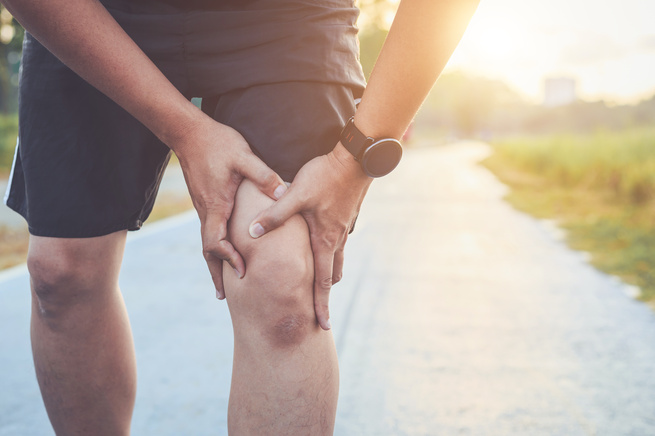
Knee replacement surgery can be life-changing for people with severe knee osteoarthritis, relieving pain and improving mobility when other treatments have not been effective. However, for some Australians, significant pain may persist even after surgery, or chronic knee pain may limit function before surgery occurs. Persistent pain does not necessarily indicate that the surgery has failed; rather, it reflects the complex nature of pain and highlights the important role physiotherapy can play in supporting recovery and long-term function.

What Is Persistent Pain?

Persistent pain, sometimes referred to as chronic pain, is pain that lasts longer than three months and does not always correspond directly to the degree of physical tissue damage. Pain is influenced by a combination of biological, psychological, and social factors rather than structural changes alone (Mills et al., 2019).

The International Association for the Study of Pain defines pain as “an unpleasant sensory and emotional experience associated with, or resembling that associated with, actual or potential tissue damage” (Raja et al., 2020, p. 1977). This definition highlights the role of the nervous system and the brain in the experience of pain. As a result, even after surgical procedures such as knee replacement, persistent pain may arise from increased nervous system sensitivity or learned protective responses rather than ongoing tissue damage.

Persistent Pain After Knee Replacement

Total knee replacement (TKR) is considered an effective treatment for advanced osteoarthritis, yet some patients continue to experience ongoing pain following surgery. Research suggests that approximately 15–20% of patients report moderate to severe long-term pain after knee or hip replacement surgery (Beswick et al., 2012).

Persistent post-surgical pain may be influenced by several factors, including:

  • Nervous system sensitisation
  • Muscle weakness or altered biomechanics
  • Long-standing protective movement patterns
  • Psychological factors such as fear of movement or reduced confidence in the joint

These factors highlight that successful recovery involves more than addressing joint structure alone and emphasise the importance of rehabilitation and pain education.

Australian Clinical Guidance: First-Line Management

In Australia, best-practice management of knee osteoarthritis and persistent joint pain is guided by evidence-based clinical standards. The Australian Commission on Safety and Quality in Health Care (ACSQHC) recommends that core treatments for osteoarthritis include patient education, exercise therapy, weight management where appropriate, and support for self-management (Australian Commission on Safety and Quality in Health Care, 2024).

These conservative management strategies should be optimised before surgical intervention is considered and remain important components of rehabilitation following knee replacement. The ACSQHC clinical care standard also emphasises that imaging and surgical referral should occur only after appropriate non-surgical treatments, including physiotherapy, have been explored (ACSQHC, 2024).

How Physiotherapy Can Help

Education About Pain and Recovery

Physiotherapists help individuals understand that pain does not always reflect structural damage and that gradual movement and rehabilitation are safe and beneficial. Improving a person’s understanding of pain can reduce fear of movement and improve participation in rehabilitation (Mills et al., 2019).

Education is also recognised as a core component of high-quality osteoarthritis care within Australian clinical guidelines (ACSQHC, 2024).

Graded Exercise and Strength Training

Exercise is widely recognised as a cornerstone treatment for knee osteoarthritis and post-surgical rehabilitation. Land-based exercise programs, including strengthening and aerobic activity, have been shown to reduce pain and improve physical function (The Royal Australian College of General Practitioners, 2018).

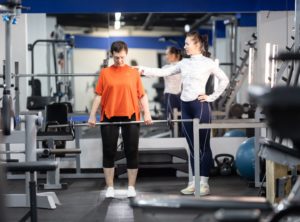
Physiotherapists typically prescribe exercises that progressively increase strength and function. These programs often focus on strengthening the quadriceps, hip muscles, and core, which help support the knee joint and improve movement efficiency.

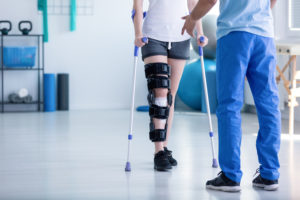
Following surgery, exercise programs begin with low-intensity movements and gradually progress as strength, confidence, and joint tolerance improve.

Movement Retraining and Functional Skills

Individuals who have experienced long-term knee pain often develop compensatory movement patterns designed to protect the painful joint. These altered patterns may persist even after surgery. Physiotherapy aims to retrain functional movements such as walking, stair climbing, and sit-to-stand transitions. Improving movement mechanics and balance helps redistribute joint loads and encourages safe, confident movement.

Pacing and Flare-Up Management

Persistent pain often fluctuates over time. Physiotherapists commonly teach pacing strategies to help patients manage periods of increased pain without avoiding activity altogether. Pacing may involve breaking tasks into manageable segments, adjusting activity intensity, and gradually building tolerance to movement.

A Multidisciplinary Approach

Physiotherapy is one component of a broader multidisciplinary approach to persistent pain management. Depending on individual needs, care may also involve general practitioners, orthopaedic surgeons, dietitians, or pain specialists. This collaborative approach addresses the physical, psychological, and social aspects of persistent pain.

Living Well With Persistent Pain

Persistent pain does not necessarily mean that recovery has failed or that improvement is impossible. Instead, it reflects the complex interaction between the body, nervous system, and lifestyle factors. Through education, graded exercise, movement retraining, and pacing strategies, physiotherapy can help individuals regain confidence in their knee, improve function, and participate more fully in everyday activities.


References

Australian Commission on Safety and Quality in Health Care. (2024). Osteoarthritis of the knee clinical care standard. https://www.safetyandquality.gov.au/publications-and-resources/resource-library/osteoarthritis-knee-clinical-care-standard-2024

Beswick, A. D., Wylde, V., Gooberman-Hill, R., Blom, A., & Dieppe, P. (2012). What proportion of patients report long-term pain after total hip or knee replacement for osteoarthritis? A systematic review of prospective studies. BMJ Open, 2(1), e000435. https://doi.org/10.1136/bmjopen-2011-000435

Mills, S. E. E., Nicolson, K. P., & Smith, B. H. (2019). Chronic pain: A review of its epidemiology and associated factors in population-based studies. British Journal of Anaesthesia, 123(2), e273–e283. https://doi.org/10.1016/j.bja.2019.03.023

Raja, S. N., Carr, D. B., Cohen, M., Finnerup, N. B., Flor, H., Gibson, S., Keefe, F. J., Mogil, J. S., Ringkamp, M., Sluka, K. A., Song, X. J., Stevens, B., Sullivan, M. D., Tutelman, P. R., Ushida, T., & Vader, K. (2020). The revised International Association for the Study of Pain definition of pain: Concepts, challenges, and compromises. Pain, 161(9), 1976–1982. https://doi.org/10.1097/j.pain.0000000000001939

Royal Australian College of General Practitioners. (2018). Guideline for the management of knee and hip osteoarthritis (2nd ed.). https://www.racgp.org.au/clinical-resources/clinical-guidelines/key-racgp-guidelines/view-all-racgp-guidelines/knee-and-hip-osteoarthritis

When winter arrives, people living with arthritis may notice their joints feel stiffer, sorer, or harder to get moving. If that sounds familiar, you’re not imagining it. 

While research hasn’t identified a single direct cause linking cold weather to arthritis flares, studies suggest that factors such as temperature changes, shifts in barometric pressure, reduced physical activity, and changes in sleep patterns may influence pain sensitivity and joint stiffness (Arthritis Australia, 2023; Kolasinski et al., 2020). 

The good news? There are practical, evidence-based strategies that can help you stay mobile and comfortable through winter – and physiotherapy plays a key role in that plan. 

Why Do Joints Feel Worse in Winter? 

Winter often changes our daily habits. We may tend to move less, spend more time indoors, and sit for longer periods. Colder temperatures can also make muscles and soft tissues feel tighter, while reduced sunlight may affect mood and energy levels (Arthritis Australia, 2023). For people living with osteoarthritis (OA), these changes may worsen symptoms. 

Osteoarthritis involves degeneration of joint cartilage and changes in surrounding tissues, which can lead to stiffness, particularly after periods of rest or inactivity (Australian Commission on Safety and Quality in Health Care [ACSQHC], 2024). That’s why many people with arthritis notice their joints feel stiff first thing in the morning or after sitting for long periods. When winter reduces activity levels, stiffness can increase – creating a cycle of moving less and feeling worse. 

Movement Is Medicine (Even in Winter) 

One of the most important messages in arthritis care is simple: 

 – Movement helps joints. 

Australian clinical guidelines consistently recommend exercise as a first-line treatment for knee and hip osteoarthritis, ahead of many passive treatments (The Royal Australian College of General Practitioners, 2018; Kolasinski et al., 2020). 

Regular movement helps by: 

  • Reducing joint stiffness 
  • Strengthening muscles that support joints 
  • Improving mobility and balance 
  • Supporting long-term joint function 

A physiotherapist or exercise physiologist may recommend a tailored program that includes: 

  • Low-impact aerobic exercise such as walking, cycling, or swimming 
  • Strength training targeting key muscle groups like the quadriceps and glutes 
  • Range-of-motion exercises to maintain joint mobility 
  • Balance exercises to reduce fall risk 

Research consistently shows that structured exercise programs can reduce pain and improve function for people with osteoarthritis (Kolasinski et al., 2020). The key is finding exercises that are appropriate for your body and sustainable long-term. 

Warmth Helps – Use It Strategically 

Cold muscles and joints can feel stiffer, especially first thing in the morning. Heat therapy can help ease this stiffness by: 

  • Increasing blood flow 
  • Reducing muscle guarding 
  • Improving comfort before movement 

Clinical guidelines suggest that heat can be a helpful adjunct strategy for symptom relief alongside exercise and activity (RACGP, 2018). 

Simple winter strategies include: 

  • Taking a warm shower before activity
  • Using a heat pack on stiff joints before exercise
  • Wearing layered clothing to keep joints warm
  • Gradually warming up before longer walks or activity

Heat doesn’t treat the underlying arthritis itself – but it can make movement more comfortable, which supports better long-term outcomes. 

Strength Protects Joints 

Muscle strength plays a crucial role in protecting joints. When muscles are weak, joints are exposed to higher mechanical loads during everyday activities like walking, standing, and climbing stairs. This is particularly important for knee osteoarthritis, where weakness in the quadriceps muscles is strongly linked to worse pain and functional limitations (ACSQHC, 2024). Australian care standards emphasise the importance of individualised strengthening programs guided by trained clinicians (ACSQHC, 2024). 

Examples of helpful strengthening exercises include: 

  • Sit-to-stand practice 
  • Step-ups 
  • Resistance band exercises 
  • Controlled squats 

Winter can actually be an ideal time to focus on structured indoor strength training, helping build resilience around affected joints. 

Weight Management and Joint Load 

For people with knee osteoarthritis, body weight can significantly influence joint loading. Research suggests that for every ~0.45 kg (1 lb) of weight lost, knee joint load during walking decreases by approximately 1.8 kg (4 lb) per step (Messier et al., 2005). Over the course of thousands of daily steps, this reduction can meaningfully decrease stress on the joint. 

Winter routines, such as reduced activity or comfort eating, can sometimes lead to weight gain, which may worsen symptoms. If weight management is relevant, physiotherapists can often work collaboratively with GPs and dietitians to support a sustainable approach. 

Pacing and Managing Flare-Ups 

Arthritis symptoms naturally fluctuate, and winter may increase the likelihood of temporary flare-ups. When pain increases, the instinct can be to stop activity completely. However, long periods of rest can worsen stiffness and deconditioning. 

Instead, clinicians often recommend pacing strategies, such as: 

  • Temporarily reducing activity intensity 
  • Continuing gentle movement 
  • Gradually building activity back up as symptoms settle 

Guidelines strongly emphasise ongoing activity and self-management, rather than prolonged rest or over-reliance on medication (ACSQHC, 2024). 

When Should You See a Physiotherapist? 

It may be helpful to seek physiotherapy advice if: 

  • Winter stiffness is lasting longer than usual 
  • Pain is limiting your daily activity 
  • Your mobility is declining 
  • You’re unsure what exercises are safe 

Early support can help you maintain activity levels, reduce pain, and prevent long-term decline in function. 

The Winter Takeaway 

Cold weather may increase joint stiffness, but it doesn’t have to stop you from staying active. 

The most effective winter strategy isn’t complete rest. It’s: 

✔ Staying active 

✔ Keeping joints warm 

✔ Strengthening muscles regularly 

✔ Managing flare-ups with confidence 

  With the right physiotherapy guidance, winter can be a season of maintaining strength and independence, not losing it. Contact your local physiotherapist today to get started. 

References 

Arthritis Australia. (2023). How cold weather impacts arthritishttps://www.arthritis.org.au/arthritis/arthritis-insights/living-well-with-arthritis/how-cold-weather-impacts-arthritis/ 

Australian Commission on Safety and Quality in Health Care. (2024). Osteoarthritis of the knee clinical care standardhttps://www.safetyandquality.gov.au

Kolasinski, S. L., Neogi, T., Hochberg, M. C., Oatis, C., Guyatt, G., Block, J., Callahan, L. F., Copenhaver, C., Dodge, C., Felson, D., Gellar, K., Harvey, W., Hawker, G., Herzig, E., Kwoh, C. K., Nelson, A. E., Samuels, J., Scanzello, C., White, D., Wise, B., & Altman, R. (2020). 2019 American College of Rheumatology/Arthritis Foundation guideline for the management of osteoarthritis of the hand, hip, and knee. Arthritis Care & Research, 72(2), 149–162. https://doi.org/10.1002/acr.24131

Messier, S. P., Gutekunst, D. J., Davis, C., & DeVita, P. (2005). Weight loss reduces knee-joint loads in overweight and obese older adults with knee osteoarthritis. Arthritis & Rheumatism, 52(7), 2026–2032. https://doi.org/10.1002/art.21139

The Royal Australian College of General Practitioners. (2018). Guideline for the management of knee and hip osteoarthritis (2nd ed.)https://www.racgp.org.au/clinical-resources/clinical-guidelines/key-racgp-guidelines/view-all-racgp-guidelines/knee-and-hip-osteoarthritis